
Confidence is built through evidence.
1:1 personalized coaching. Built around your goals, your schedule, your fitness, and the rest of your life, so every week has a reason and every session moves you forward.
WHO IS THIS FOR?
You’re already putting in the work. Let’s make sure it’s taking you somewhere.
You’re a working professional with a busy schedule and you’re good at what you do. You bring the same standard to your training that you bring to your job, and you've started to notice the two don't match yet.
You’re probably already running consistently. You might be chasing a half marathon or marathon PR. You might love lifting and want to keep strength in the picture. You’ve put enough time into running to know you’re capable of more, but you’re still trying to figure out exactly how all the pieces should fit together.
How much should you run?
How hard should the workouts be?
Where does strength fit?
When should you add more?
When should you back off?
What happens when work gets busy, you miss a few days, or a workout goes sideways?
There’s already plenty of running information out there. The hard part is knowing what actually matters for you.
That’s the problem I help solve.
We take your running, strength, recovery, schedule, goals, and everything else going on in your life and turn it into one clear training direction.
So instead of constantly wondering whether the work is working, you can actually see it adding up.
WHO AM I?
I started running in 2020 without much of a running background and pretty quickly became curious about how far I could take it.
A 1:23 half marathon became 1:17 and eventually 1:13. My first marathon was 2:48. Then 2:45. Then 2:39. Along the way I’ve trained for road races, pushed into ultras, run high-mileage blocks, kept strength training in the picture, made plenty of mistakes, changed my mind on things, and learned a lot about what actually moves the needle. And honestly, the better I’ve gotten, the less interested I’ve become in trying to make running sound complicated.
I care about understanding the details. I just don’t think the runner needs to carry all of that complexity.
The part I enjoy is taking something that feels confusing, figuring out what actually matters, and making it make sense. That’s how I try to coach too. I’m still training. Still racing. Still learning. Still getting humbled by workouts every now and then. And I’m still asking the same question that got me into all of this in the first place:
“What else am I capable of?”
I want the runners I work with to get the chance to answer that question for themselves too.
That’s why I’ve become so passionate about helping other people find the same joy, structure, and confidence that running gave me. I believe we’re all capable of more than we realize, but we don’t find that out by waiting. We find out by taking the first step.
With the right plan, mindset, and structure, I truly believe you can achieve more than you think. It starts with action, and it grows through consistency and belief.
2020
Started running during lockdown in an old pair of Nike Pegasus
2-3 miles at a time, as hard as I could
2021
Completed the David Goggins 4×4×48 Challenge
Four miles every four hours for forty-eight hours
The first time I understood that the limit is the mind, not the body.
2023
First half marathon in 1:23 (San Diego Half)
First marathon in 2:48, placing 3rd in my Age Group and a Boston qualifier (Mountains 2 Beach Marathon)
First 100k ultra in Big Bear, CA, 12:51 (Kodiak 100k)
2024
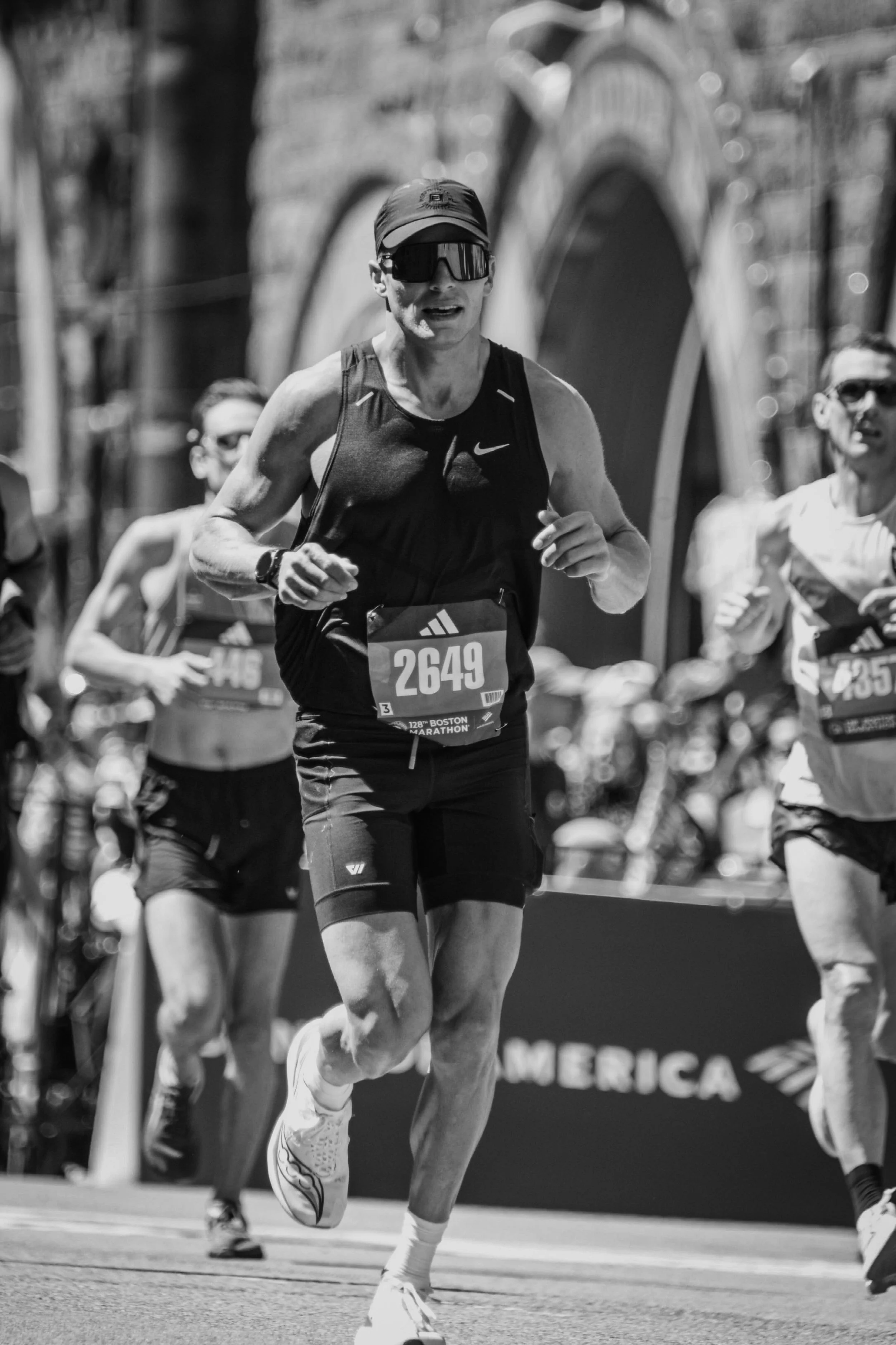
Completed Boston in 2:45 (Boston Marathon)
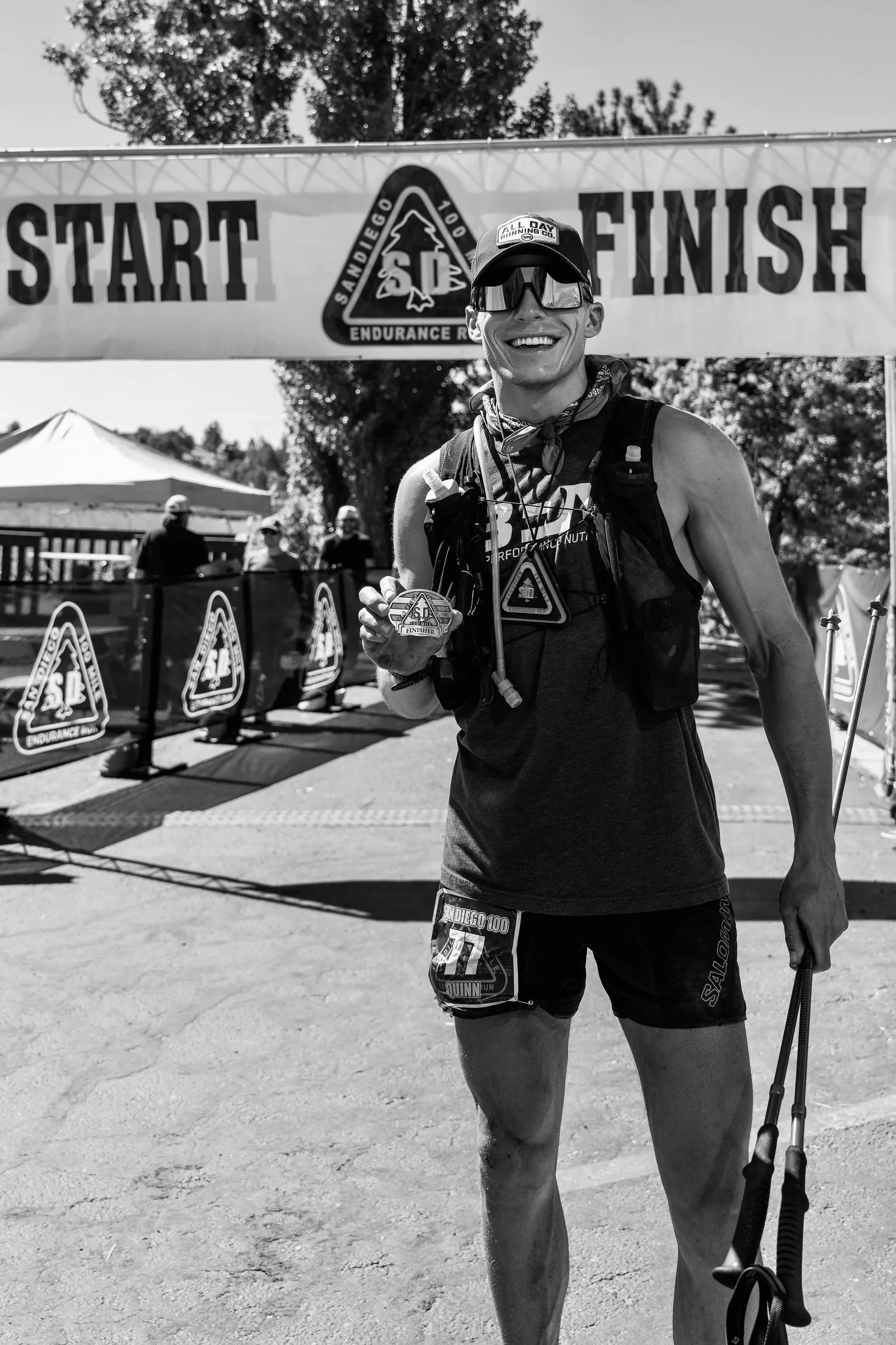
First 100-mile ultra finish in San Diego, 27:28 (San Diego 100)
62 miles in 12 hours at the San Diego 12-Hour
2025
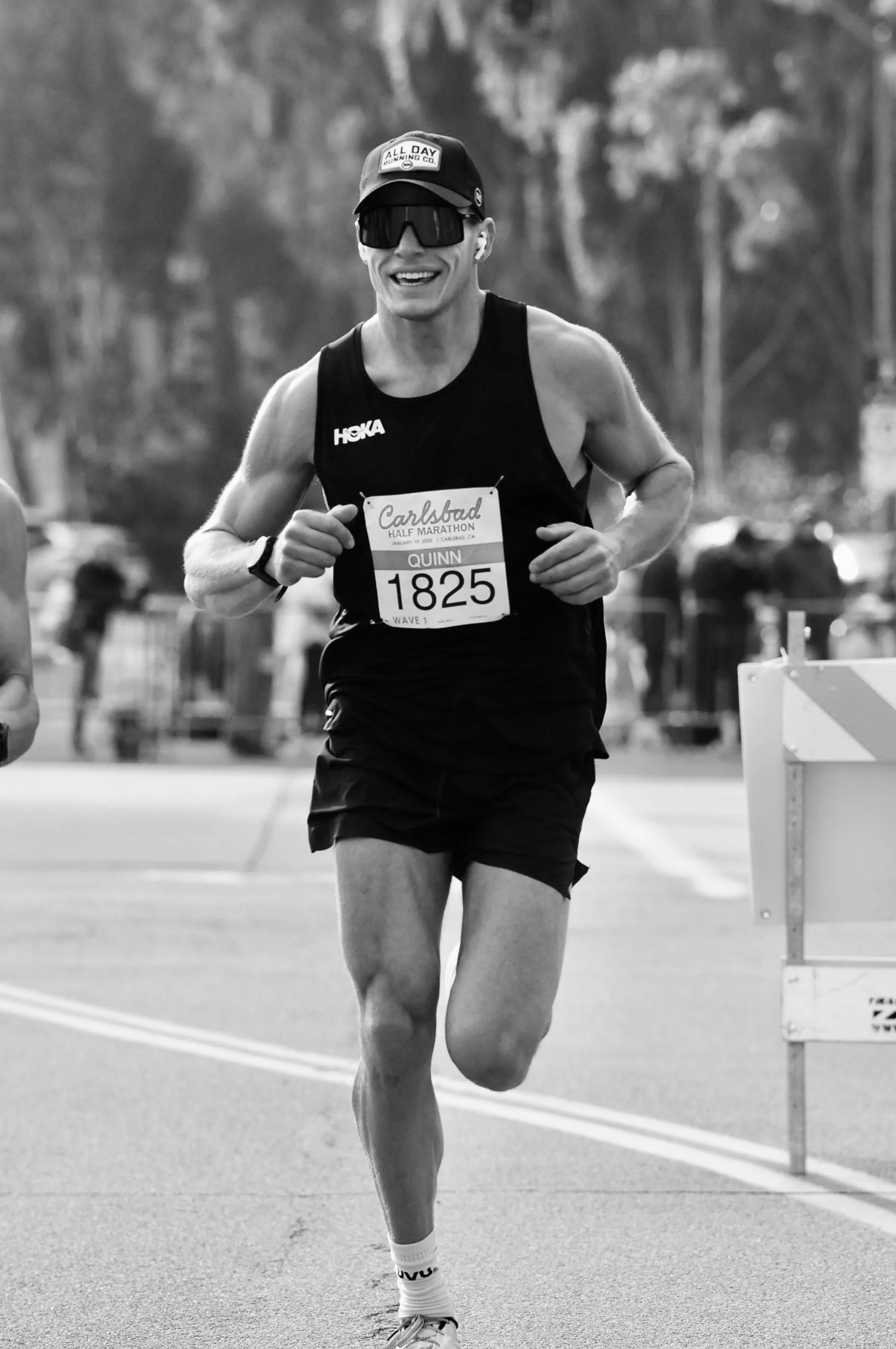
1:17 half PR at Carlsbad Half Marathon, 2nd in Age Group
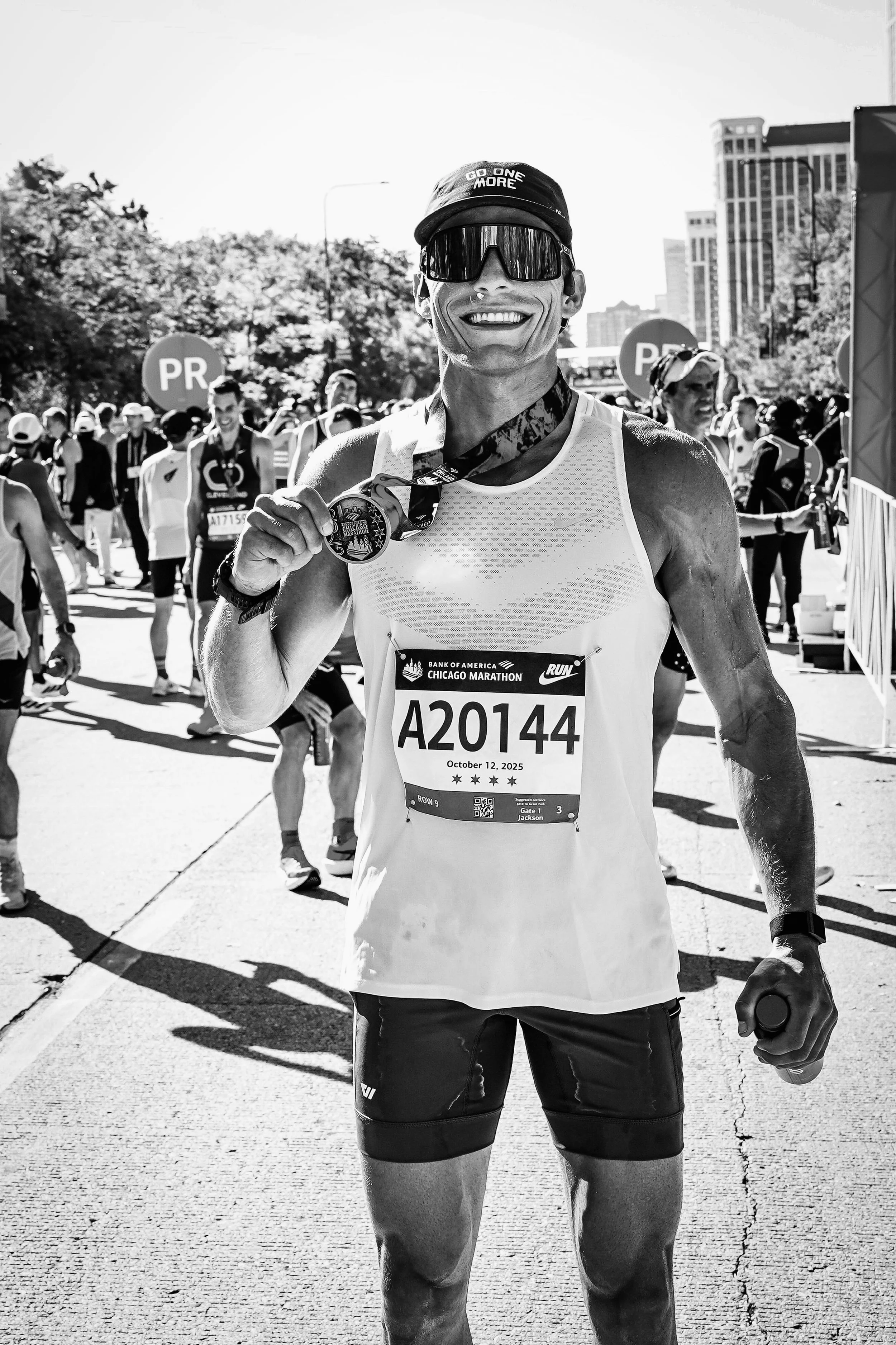
2:39 marathon PR at Chicago Marathon, 7 months after a stress reaction in my tibia
2026
1:13 half PR at Seaside Half Marathon, 1st overall
Training for my 2nd Chicago Marathon this October
MY PHILOSOPHY
Running is simple. That doesn’t make it easy.
Getting better still comes back to doing a handful of things really well for a long enough period of time.
Keep the principles simple. Make the application personal.
I don’t want you blindly following a calendar.
I want you to understand what we’re building, why each part matters, how your body is responding, and what we’re learning along the way.
The way I think about the process is through STACK:
-
Figure out what actually matters right now. Your goal. Your current fitness. Your schedule. Your strength work. Your training history. Your limitations. Your life. Then narrow the focus.
-
Every meaningful part of the week should have a reason behind it. You should understand what we’re trying to build without needing a physiology degree to understand your own training.
-
Training happens in real life. Sleep changes. Work gets busy. Travel happens. Your body gives us feedback. We pay attention and adjust when there’s a reason to.
-
Good training needs time. We keep stacking the right work instead of constantly changing direction because something new showed up on the internet. Fitness builds. Strength builds. Durability builds. Confidence starts to build too.
-
Over time, you learn yourself. What mileage works. How different efforts should feel. How strength fits. How you recover. What fatigue is normal. When something deserves attention. What you can handle. What you’re capable of. That’s the bigger goal.
Clarity → Execution → Evidence → Confidence → Performance
The better you understand your training, the easier it becomes to trust the work behind you. And that’s where real confidence starts.
Before I write a single workout, I want to know what your week holds. Work, sleep, travel, family, the gym, the stress you are carrying that has nothing to do with running. That’s your true capacity. Training goes inside it.
The plan that fits your life beats the perfect plan you can only execute on a good day.
WHAT DO YOU GET?
Your entire training picture, built around you.
-
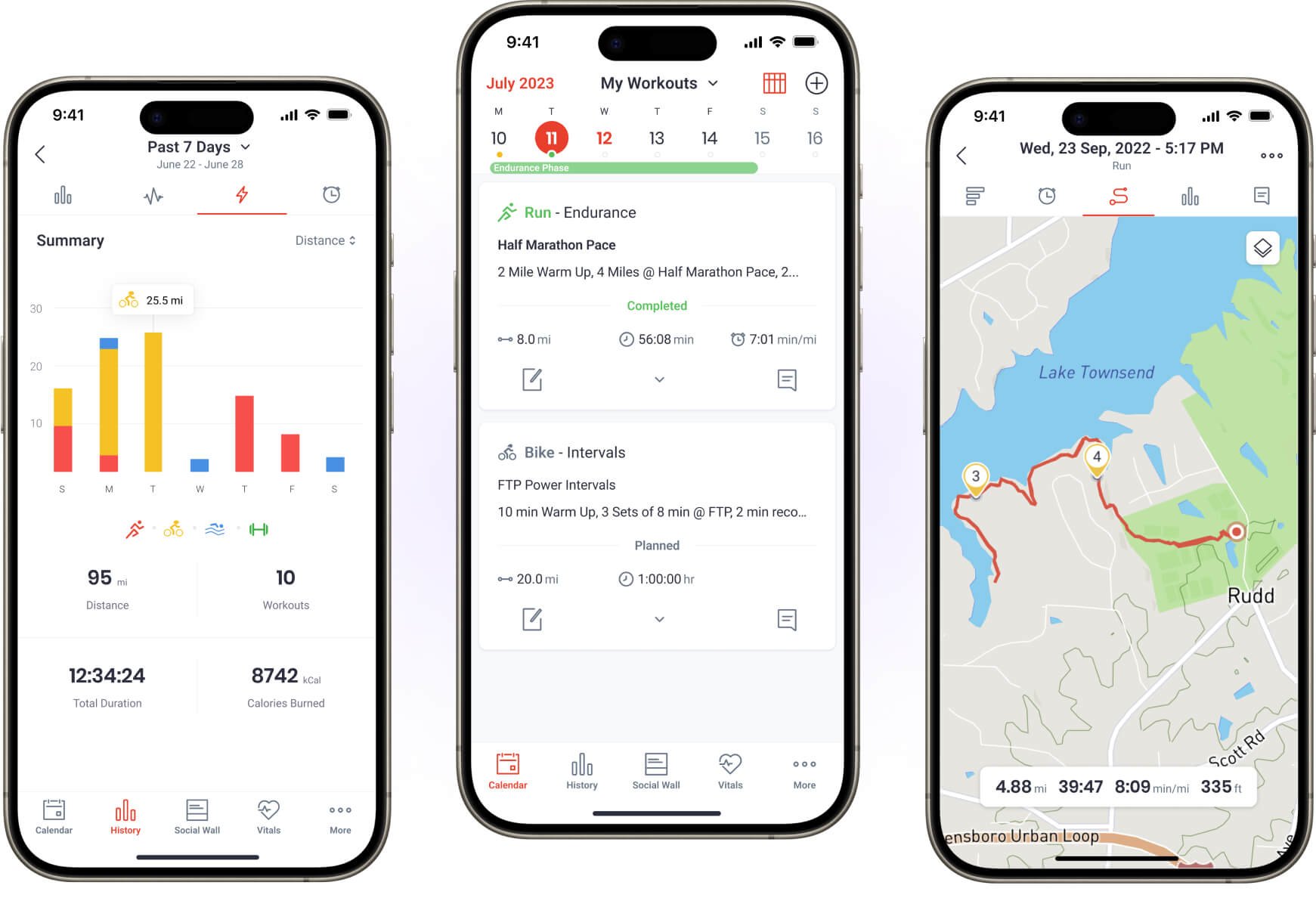
Your training will live in Final Surge and sync with your watch. You always have four weeks in view, and every week gets adjusted based on your schedule, recovery, check-in, and progress.
-
Periodized against your mileage. I write your strength training or work around a program you already follow. Your running and lifting will be planned together so they support each other.
-
Every check-in, every coach note, every report, your paces, your lifts, and your full training year in one place you can scroll back through for as long as we work together. Education library and resources included.
-
You’ll complete a short check-in every Sunday. I’ll review it before writing your next week and send you a response based on what actually happened.
-
Direct access to communication with me throughout the week for questions, comments, anything.
-
The zoom-out. Progress, direction, what changes next. 30-minutes with an agenda, so we spend it on what matters most.
-
10-14 days out. Mile-by-mile pacing, carb load protocol, aid station plan, weather contingency, what you do if the first 5K goes out hot, and what you do when it starts hurting at twenty.
-
Practical performance fueling. Daily adequacy, protein targets, and in-run carbohydrate strategy. Not a diet, and not a meal plan.
-
Yes, I want you to run faster. I want you stronger too. But I also want you to leave the process with a much better understanding of yourself as an athlete. You should know what works for you. You should know why. And when it’s time to race, I want you standing there with actual evidence behind the belief that you’re ready.
I make it simple enough to execute & specific enough to work.
You give me your commitment. You have mine.
PROOF
The athletes I coach.
-
![]()
Carsten, Marathoner 3:46:46
“I've followed along Quinn’s running journey from the start and I know the work ethic he has, what he’s done to get where he’s at, and he has plenty results behind him to prove it all in the running space.
I was stoked for it to be Quinn to be the guy to be learning from because I knew he would do everything he could to put me in the position to succeed at my goals. And he certainly did that.”
-
![]()
CELESTE
“I’m super blessed and grateful to have Quinn as my coach. I’m learning so much and taking it all in. Super proud to call Quinn my coach.”
-
![]()
“Their attention to detail and commitment to quality truly stood out.”



FAQ
Questions people ask before they apply.
-
We cover that on the call once I know what you actually need. There are monthly and upfront options and a four month minimum. I’m not going to put a number on a page and let you decide without context, and I’m not going to be cagey about it on the call either.
-
Definitely not. Strength is a big part of how I personally train and how I think about developing runners. We’ll figure out the amount and structure that fits your running goals rather than treating the gym like something you automatically have to give up.
-
No. A lot of the runners I work with are preparing for half marathons and marathons, but a race doesn’t have to be on the calendar. If you want to become a better runner, build your running alongside strength, create more structure, and prepare yourself for bigger goals down the road, we can build around that too.
-
You can, and some of them are good. But a plan is written once for a hypothetical person. This gets rewritten every week for you, based on what your body and your week actually did. That difference is the entire product.
-
An app gives you a plan. An algorithm can’t have an opinion about your specific week, and it can’t tell you the honest thing when the honest thing is inconvenient.
-
You always have four weeks in front of you, so you can see where the block is going and plan around it. But the four weeks are the outline, not the final word. Every week, after your check-in, I adjust the week ahead based on how your body responded, how recovery is going, and what actually happened in your life.
-
Then we adjust. Work trips happen. Family stuff happens. Sleep gets weird. You miss a run. Life isn’t going to perfectly follow a training calendar. We’ll look at what happened and make the next decision from there.
-
Both, in the same program. Strength that is not written against your mileage is a separate hobby that makes you tired. That is why lifting has not worked alongside your running so far.
-
We adjust, and I will be more useful to you injured than a plan will be. If it needs a clinician, I will tell you that and we will work around it while you get it handled.
-
I give practical fueling guidance for performance. Daily intake ranges, protein targets, carbohydrate strategy before and during long runs and races. I don’t write meal plans, I don’t do weight loss programming, and if something needs a registered dietitian or a clinician, I will say so and help you find one.
-
A monthly strategy call, a weekly written check-in through your portal, and text access in between for whatever comes up. You aren’t waiting a month to ask me something. You can text or call me during normal waking hours.
-
Onboarding is immediate. After you sign up you complete an intake covering your goals, training history, schedule, and current fitness. Your plan is typically live in Final Surge within 48 to 72 hours.
-
Tell me. We’ll talk about what needs to change and make adjustments. If it still isn’t working, either person can use the 14-day cancellation policy.
You already know how to work hard.
That was never the problem.
You can keep training hard and wondering if it is enough. You can keep saving posts, switching plans, second-guessing your paces, and hoping the next block finally clicks.
Or you can build a system around the work you are already putting in. A system that gives your running structure. A system that gives your strength purpose. A system that helps you show up to race day with more proof, more confidence, and less guessing.